
"coffee in americas"
24000 article(s) found

Introduction of Fine Coffee Bean producing areas-- Peruvian Coffee from Peruvian Coffee Manor in South America
Well-known representative coffee: Peru (Peru) Peru is one of the major coffee producing countries in South America, and coffee is Peru's largest export agricultural product, which has grown greatly in recent years. Peru has the Andes that run parallel to the coast. More than 90% of Peruvian coffee is grown in the north, in valleys east of the capital Lima, and in forest areas on the slopes of the Andes. Peruvian coffee

The Coscarpa region of El Salvador, a small coffee-producing country in Central America
It is one of the small countries in Central America with a very dense population. People here love coffee. The coffee in El Salvador tastes well balanced. Salvadoran coffee exports account for 40% of the country's exports. The best quality coffee is exported from January to March each year, and 35% of the extra hard beans are exported to Germany. In the early 1990s, due to the impact of the war, El Salvador's national economy

Introduction of Coffee producing area in America-- Ecuador Galapagos Coffee Ecuador Coffee Taste
Well-known representative coffee: Galapagos is between Colombia and Peru, and Ecuador, which passes through the equator, is one of the few countries in South America that produces both Arabica and Robastian coffee. In fact, Ecuador means the Spanish equator. Due to the use of old-fashioned traditional harvesting and handling methods, Ecuadorian coffee has not been

Introduction to coffee bean producing areas-Ecuadorian boutique coffee in South America
Well-known representative coffee: Galapagos is between Colombia and Peru, and Ecuador, which passes through the equator, is one of the few countries in South America that produces both Arabica and Robastian coffee. In fact, Ecuador means the Spanish equator. Due to the use of old-fashioned traditional harvesting and handling methods, Ecuadorian coffee has not been

Introduction to the origin of coffee in America-Peruvian boutique coffee Peruvian coffee taste Peruvian coffee
Peruvian coffee beans have a round taste, moderate mellow, not thick not light, soft acid is one of its major characteristics, with a slightly nutty flavor. As the export volume increases and coffee lovers become familiar, more and more people like Peruvian coffee with its mellow taste and soft sour taste. Well-known representative coffee: Peru (Peru) Peru is one of the major coffee producers in South America, while coffee

Los Congo Estate in Central America Fine Coffee Bean Flavor Taste Aroma Description Introduction
Nicaragua is located in central Central America, bordering both the Pacific Ocean and the Caribbean Sea. It has a beautiful tropical feel. Although it is one of the poorest countries in Central America, it produces coffee that is loved by coffee lovers. The development of coffee industry in Nicaragua is not easy. Due to the influence of civil war, coffee production has dropped sharply for a time, but it has shown an upward trend in recent years. although

A big country of fine coffee in southern Central America-- an introduction to the origin of fine coffee in Costa Rica and Central America
Guide to Caxiang: I haven't told you about the country where coffee is produced for a long time. Let's take a look at the coffee cultivation in Costa Rica today. The editor has something to say: Costa Rica first entered the editor's eyes when he did not know which year's World Cup, Costa Rica played against China, and then. China lost. Costa Rican coffee cultivation was introduced from Cuba in 1779 and only in 1820.

Introduction to Coffee Bean producing areas-- Panamanian Fine Coffee from South America
Famous representative coffee: Panama Panama is bordered by Costa Rica to the west and Colombia to the east of South America. Most of its coffee is grown in the mountains near Costa Rica to the west. Panamanian coffee has a medium and uniform flavor and texture, with a blue mountain temperament, so it is said that Panamanian coffee is often used to imitate the high-priced Hawaiian Kona or the Jamaican Blue Mountains. But Ba
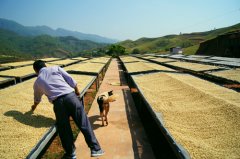
Introduction to the origin of coffee in America-- Peruvian boutique coffee Peruvian coffee taste Peruvian coffee
Well-known representative coffee: Peru (Peru) Peru is one of the major coffee producing countries in South America, and coffee is Peru's largest export agricultural product, which has grown greatly in recent years. It can be seen from the map that the Andes mountains run parallel to the coast in Peru. More than 90% of Peruvian coffee is grown in the north, in the valleys east of the capital Lima, and in the slopes of the Andes.

A brief introduction to Renas Manor in the Santa Ana Volcano region of El Salvador in the north of Central America
The Republic of El Salvador, located in the north of Central America, is the most populous country in Central America. The country is bordered by Honduras to the north, the Pacific Ocean to the south and Guatemala to the northwest. The national economy is dominated by agriculture, and the main crops are coffee and cotton. El Salvador is also one of the birthplaces of ancient Mayan culture, with not only distant culture, but also volcanoes, plateau lakes and Pacific coast.

El Salvador, a coffee producer in Central America with a mild taste.
Unique, mild-tasting coffee. El Salvador is one of the small countries in Central America with a dense population. The flavor of its coffee is characterized by excellent balance. Today, this coffee accounts for 40% of the country's exports. 35% of the extra hard beans of the best coffee are exported to Germany from January to March. In the early 1990s, the guerrilla war greatly damaged the country's national classics.

Introduction to coffee bean producing areas-- characteristics of Ecuadorian fine coffee in South America
Well-known representative coffee: Galapagos is between Colombia and Peru, and Ecuador, which passes through the equator, is one of the few countries in South America that produces both Arabica and Robastian coffee. In fact, Ecuador means the Spanish equator. Due to the use of old-fashioned traditional harvesting and handling methods, Ecuadorian coffee has not been

Introduction of varieties and brands of manors in coffee bean producing areas of three continents in America
Introduction of varieties and Brands of Coffee Bean producing areas on three continents in 1570, when the Turkish army besieged Vienna and failed to retreat, someone found a bag of black seeds in the Turkish army barracks. No one knew what it was. A Polish man who had lived in Turkey took the bag of coffee and opened his first coffee shop in Vienna. At the end of the 16th century, coffee

The main origin of coffee is South America. What are the coffee producing countries in South America? The three largest coffees in the world
Professional coffee knowledge exchange more coffee bean information please follow the coffee workshop (Wechat official account cafe_style) the main origin of coffee in South America, which coffee producing countries in South America? What are the three major coffee producing areas in the world? In 1718, the Dutch first brought some coffee to Surinam on the northeast coast of South America.

Grinding and roasting of boutique coffee beans at Manor Lina, Nicaragua, one of the poorest countries in Central America
Nicaragua is one of the major coffee-producing countries, producing high-quality coffee. Even coffee from the Antigua Mountains of Guatemala, which is famous in Asia, imports raw beans from Nicaragua. Although Nicaraguan coffee is not famous in Asia, Nicaragua coffee is already famous all over the world (Starbucks has many cooperative coffee farmers in Nepal), while several coffee-producing countries in Central America
Cross-strait coffee gives you 5 minutes to understand the origin of coffee.
There are all kinds of legends about the origin of coffee, but most of them are forgotten because of its absurdity. People will not forget that Africa is the hometown of coffee. Coffee trees are likely to be found in Ethiopia's KAFFA province. Later, batches of slaves were sold from Africa to Yemen and the Arabian Peninsula, and coffee was taken everywhere along the way. That's for sure.
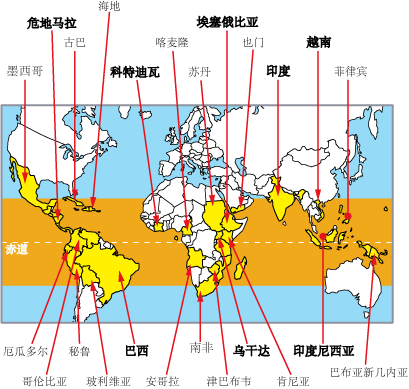
Suriname is the first country in South America to grow coffee. Norway is a major importer of coffee products.
Suriname Suriname (Surinam) is the first country in South America to grow coffee, and Norway was once a major importer of coffee products. However, the country's output is very small today, and it is mentioned here only for historical reasons. The Dutch, who settled in Suriname in 1667, introduced coffee trees from Java in the early 18th century. The first coffee trees were made by the mayor of Asmstedan.

Introduction to the Regional treatment method of Santa Rita Coffee Bean in Colombia
Columbia Santa Rita Coffee Bean Flavor characteristics Manor area treatment method for growing coffee also requires daylight and proper shade, which is most suitable for planting on fertile soil or volcanic ash soil. Therefore, the origin of coffee is widely distributed in South America, Central America, the West Indies, Asia, Africa, Arabia, the South Pacific and Oceania. Such as Ethiopia and Tanzania in Africa

Bolivia, located near Brazil, the largest coffee producer in South America, is still an underrepresented country.
Bolivia, located near Brazil, South America's largest coffee producer, is still a place unknown to many coffee lovers. But the country is famous for producing high-quality coffee and has good conditions for coffee cultivation and production as well as Brazil. Bolivian raw beans are large and uniform in size, and the green ones are high-quality raw beans. The majority of Bolivian coffee varieties are Cadura.

Introduction to coffee bean producing areas-- South America Peruvian boutique coffee Peruvian coffee characteristics Peruvian coffee mouth
Well-known representative coffee: Peru (Peru) Peru is one of the major coffee producing countries in South America, and coffee is Peru's largest export agricultural product, which has grown greatly in recent years. It can be seen from the map that the Andes mountains run parallel to the coast in Peru. More than 90% of Peruvian coffee is grown in the north, in the valleys east of the capital Lima, and in the slopes of the Andes.